

Diddy’s Case Overcharged Under RICO-Celebrity Lawyer Explains
[Source: Court TV]
Celebrity lawyer and legal analyst Christopher C. Melcher, who is ranked as a best family law attorney in California, explains why
Diddy‘s case was overcharged under RICO on Court TV in his federal sex trafficking and racketeering trial.
Summary:
In a special investigation hosted by Vinnie Politan, legal experts — including top family law attorney and legal analyst Chris Melcher — dissect the downfall of Sean “Diddy” Combs, once a music and business mogul, now a convicted felon. Despite being acquitted of racketeering and sex trafficking, Combs was found guilty of transporting individuals across state lines for prostitution.
Melcher argues the prosecution was driven by public outrage following the release of a 2016 video showing Diddy assaulting Cassie, which reignited scrutiny long after the statute of limitations had expired for state charges. He says this led federal prosecutors to overcharge the case under RICO.
Nicole Brenecki adds that the prosecution’s complex strategy failed to connect with jurors, contrasting criminal standards of proof with parallel civil lawsuits led by attorney Tony Buzbee. A victim’s letter claiming prosecutors pressured her to identify as a victim further complicates the narrative.
Both attorneys agree the case’s origins in civil suits and media pressure blurred the lines between justice and spectacle — leaving Diddy’s legacy shattered but the legal system’s motives under question.
Transcript:
Host: I’m Vinnie Politan. We continue our investigation of the fall of Diddy Combs, from cultural icon to convicted felon. Why did this happen and what will happen next? Here’s the story.
Why Was Diddy Prosecuted?
Sean “Diddy” Combs once embodied the heights of fame, mogul, producer, billionaire. But in 2025, his empire crumbled under the weight of scandal and a criminal conviction. For months, a Manhattan courtroom became a stage where his glamorous facade was stripped away, replaced by testimony of alleged coercion, violence, and manipulation. Former associates painted chilling scenes of drug-laced parties and young recruits pulled into his orbit, only defined themselves trapped.
The defense fought fiercely, insisting the stories were exaggerated, tainted by fame and by money. But the jury saw through the smoke. While acquitting him of racketeering and sex trafficking, they returned guilty verdicts on transporting individuals across state lines for prostitution. A shocking result for someone facing a potential life sentence. Once hailed a visionary, Combs now awaits sentencing, his reputation scorched, his legacy overshadowed by a conviction that transformed him from celebrity powerhouse to convicted felon.
Why Prosecutors Lost in Diddy’s Case
There’s no other way to slice this. I mean, this was a loss for prosecutors. They did not win this case. They got convictions on the least of the least serious charges in the case. Right. This is a racketeering case. This was a sex trafficking case. Not guilty as well. With that in mind, I want you to take a look at this because this is something that shocked me. This was a sentencing letter written by victim three. Take a look. Sentencing letter from Virginia “Gina” Huynh.
She is victim three. She wants him to be released. “I cooperated fully with prosecutors. During those meetings, I felt pressured to feel like a victim. I told them I was not, but they insisted that I was, even when I expressed my truth otherwise. I understand they concluded that I had been sex trafficked and involved in forced prostitution. I did not agree with that conclusion. I was not trafficked. I did not engage in prostitution with him or others. That would have been my testimony if called to the stand. I was subpoenaed and fully prepared to testify and answer all the questions truthfully.”
But victim, one of the victims not called to the stand by prosecutors in this case. And the part that really, really stuck out to me was, “During those meetings, I felt pressured to feel like a victim.” That’s not the role of prosecutors. It just isn’t. I feel a little uncomfortable if a victim feels like they’re pressured by prosecutors. Not supposed to work that way. But in light of this statement by victim number three and the verdict by the jury at the trial, it brings us to the next question in our investigation, why was Diddy prosecuted?
Why did they bring this case? What was the factor that took this case and brought it into federal court in New York? Here to help answer that question is New York trial attorney Nicole Brenecki and celebrity lawyer Chris Melcher. Great to have you both here. Nicole, what’s your answer to that question? Why do you think he was prosecuted here? We know the results now. So this is a little bit of 2020 hindsight. But why do you think they did it and why would they pressure someone they believe is a victim into believing they were a victim?
Nicole Brenecki:
Good evening. Thank you for having me. So a very good question in light of the letter that she wrote. I think Cassie, it was very horrific what happened to her. I think we can all agree, and there’s no discussion here, but her situation precipitated a slew of civil lawsuits, which I think put the prosecution onto these facts. And the next problem is that they put on a very grand case with very broad and very complex charges, which are very abstract to a panel of a jury very often because you have to prove elements of those and they’re very complicated.
Diddy’s Acquitted on Lowest Charges
So they had a very ambitious goal. But as you correctly pointed out, it was rather a failure given that they were only able to acquit on the lowest charges. What happened to her was more, in my opinion, a evidence of a domestic abuse case, a family offense, but that’s not what he was charged with in this particular case. He was charged with racketeering, RICO, sex trafficking and prostitution across state lines.
It was not a domestic violence case of her against him. We know that there was a civil lawsuit between them. We know it was settled for a big amount of money, but that’s not what this case was about and that’s probably why they failed.
Vinnie Politan:
Yeah. I mean, horrific domestic violence is what we’re talking… We saw it. I mean, we saw the video. It was right in front of our face. Chris, when all this happened. I mean, this was a big deal. I remember the house raid of Diddy. Here they are, they’re going into his house in Florida. They go into his house out in L.A. And at that point, we’re all talking about, oh my goodness, what are they uncovering?
Diddy’s Public Raids
Who is going to be on these videos? What celebrities? And none of that materialized. Do you think the fact that it was such a public raid and such a public case forced them to bring these charges? Or do you think there was something else motivating them, Chris?
Chris Melcher:
Well, Vinnie, I think the motivation was the release of the video from 2016 of Diddy beating Cassie in the lobby of that hotel room. So remember, that’s nine years ago, but there was no action, criminal action, taken until after that was released. CNN published it in May of 2025. I’m sorry, 2024. And then the indictment happened in September of 2024. So I think that was the pivotal moment. They could not ignore this. Everyone could see this was a horrific act of violence against her being helpless.
Statute of Limitations Expired under State Law
And at that point, I think that was the impetus to charge him. The problem is is that they overcharged this case. This is a conspiracy of one guy doing depraved things. And the problem was is that these things that he did, particularly that video in 2016, were so old they couldn’t be charged under state law, the statute of limitations that expired. So they were stuck going with RICO, which has a lot longer tail to it.
Vinnie Politan:
That’s incredible analysis, Chris. It’s a domestic case, domestic violence. It’s horrific. The statute of limitations runs. So we got to get them somehow some way. And it’s like we’re trying to fit the charges, but it doesn’t fit the underlying facts of the case. So I can understand the frustration of prosecutors. But at the end of the day, something doesn’t seem just right about the way they went about it. Let’s take a look at this.
Brendan Paul, this was another part when it all came down. Brendan Paul, this arrest video for cocaine and marijuana possession. We heard all these stories that this guy was the alleged drug mule of Sean “Diddy” Combs. Charges against him were dropped. And something you brought up Nicole, and I want to play it for everyone to remind them that Tony Buzbee, the civil attorney, was very public in making these announcements of the civil suits. Let’s remind folks.
Tony Buzbee:
Our team has had, at this point, more than 3,285 individuals contact us with people claiming to have been victimized by Sean Combs. After vetting, we now represent 120 individuals who intend to bring civil claims in civil court against Sean “Diddy” Combs. Although we are vetting each call as stringently as we can, I always start with a mindset that I believe victims.
I believe victims because I understand the tremendous courage it takes to step forward. That being said, as stated, we are vetting every call that we receive. We have had to turn away some. For each, we ask for corroboration. For each, we ask for the identity of witnesses. We also have collected pictures, videos, texts. We check venues. We check dates. We want to corroborate that the claims being made have legitimacy and merit.
Vinnie Politan:
And Nicole, I think you’re right on also that all this public announcement of these civil lawsuits and this behavior and the outrage from it, but what do you think the relationship should be between civil lawsuits and criminal prosecutions? I mean, we see in a lot of the criminal cases that we cover that there’s a wrongful death civil case afterwards. But here everything was sort of in the reverse.
Civil Case & Criminal Case Definitions
Nicole Brenecki:
Even though you can have the same facts that pertain to a civil case and a criminal case, these acts have different definitions under criminal law and civil law. That’s number one. Number two, the standard of proof, the burden of proof also differs. So here you have beyond a reasonable doubt, and in civil cases, it’s usually preponderance of evidence. So the criminal cases have a more strict standard in terms of proving the act and different evidence rules apply.
So usually when someone prevails as a victim on that type of a case, they have a viable civil case to follow. But in this particular case, we had civil cases happening before the charges came against Diddy. And Mr. Buzbee was at the forefront of some of those, but we all know that it didn’t really go that great for him. He was banned from filing lawsuits in SDNY in New York and other sanctions happened as well. So those were maybe frivolous, but there may be more coming and I’m sure they will.
Vinnie Politan:
Yeah, the civil suits keep on coming. Big thanks, Nicole Brenecki. We appreciate your insight. Chris is going to stick with us. Coming up next, if Diddy gets out, what will his private life be like?
Marc Agnifilo:
It’s a great victory for Sean Combs. It’s a great victory for the jury system. You saw that the Southern District of New York prosecutors came at him with all that they had. They’re not stopping. But one thing stands between all of us and a prison, and that is a jury of 12 citizens.
Make sure to follow Chris on Twitter at @CA_Divorce.
©2025 Court TV. No claims made to copyrighted material. Aired 10/3/25.
5 More interviews with Celebrity Lawyer and Legal Analyst Christopher C. Melcher


More from Christopher C. Melcher on Diddy's Trial
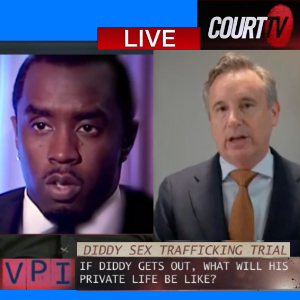
Celebrity Lawyer Discusses Diddy’s Future After Conviction
October 27, 2025