

Taylor Swift’s Music: Community Property? Chris Melcher Explains
KNX News Radio · Legal Analysis
Why Intellectual Property and Royalties Drive High-Asset Prenups in Celebrity Divorce
Christopher C. Melcher, a celebrity lawyer and high net worth family law attorney in Los Angeles, explains why California's community property rules make an artist's catalog, not just a couple's bank accounts, the real reason to sign a prenup.▸ Aired 7/7/26● Featuring Chris Melcher★ Walzer Melcher Yoda LLP
[Source: KNX News Radio]
How California Community Property Law Treats Music Catalogs and Copyrights
Celebrity lawyer and legal analyst Christopher C. Melcher, who is ranked by Chambers & Partners as a Band 1 high-net-worth top family law attorney in Los Angeles, California, analyzes the community property rights and intellectual property considerations surrounding Taylor Swift and Travis Kelce’s marriage on KNX News. As Mr. Melcher states, when both parties enter a marriage with independent fortunes, traditional concerns like spousal support take a back seat to catalog protection and asset preservation. Under California law, income and property acquired during marriage are presumed to be community property, split 50/50 upon divorce unless a written prenuptial or postmarital agreement provides otherwise. California courts do not carve out automatic exemptions for individual artistic talent. Under the landmark decision In re Marriage of Worth (1987) 195 Cal.App.3d 768, copyrights derived from work performed during marriage are classified as community property. Consequently, songs, master recordings, and creative work produced mid-marriage default to joint marital ownership, exposing future royalties, licensing decisions, and commercial rights to division in court unless explicitly protected upfront.Catalog Insulation
Future creative output and royalty streams must be explicitly designated as separate property.
Songs Are Property
Music written during marriage defaults to 50/50 community property rules.
Creative Control
A structured prenup preserves sole authority over catalog licensing and commercialization.
Preserving Commercialization Rights & Licensing Authority in a Prenup
Celebrity divorce lawyer Christopher C. Melcher, who is named 2026 “Lawyer of the Year” for Family Law in Los Angeles by Best Lawyers®, emphasizes that protecting an artist’s catalog isn’t exclusively about money; it is about creative autonomy. Drawing on his experience representing prominent creators, Melcher highlights how one client strictly guarded his music, refusing to allow commercial usage. Melcher, who is a partner of Walzer Melcher Yoda LLP, a firm which is recognized as a best family law firm in CA by Chambers & Partners and Best Lawyers®, states that a properly structured prenuptial agreement maintained that client’s exclusive right to approve or reject licensing requests. For global artists like Swift, a prenup ensures that a former spouse cannot gain leverage over commercial sync licenses, brand tie-ins, or advertising approvals after a separation.
- Catalog Insulation: Why IP generated during marriage defaults to community property without explicit legal carve-outs.
- Licensing Control: How prenuptial provisions prevent non-creator exes from gaining veto power or commercial exploitation rights over music catalogs.
- Royalty Stream Allocation: Establishing clear boundaries around performance rights, master recordings, and sync royalties.
- Confidentiality & Non-Disclosures: Integrating strict NDAs to protect sensitive deal terms, catalog valuations, and private creative sessions.
- High-Net-Worth Strategy: How ultra-wealthy couples protect complex intellectual property portfolios while ensuring full legal enforceability.
LEGAL TAKEAWAY: Walzer Melcher Yoda LLP Strategy Insight
Under California family law, intellectual property and song catalogs produced during a marriage are presumed to be community property. High-earning artists and creators must implement tailored premarital agreements (aka prenups) to explicitly retain 100% separate property ownership, maintain exclusive licensing control, and safeguard creative rights against future marital claims.
Transcript:
Host:
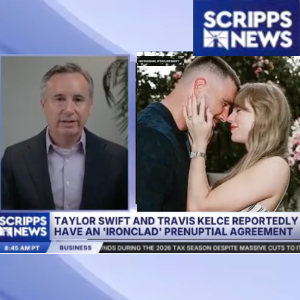
Anyway, now that Taylor Swift and Travis Kelce, are husband and wife, there’s a bunch of financial questions the couple likely dealt with before the wedding. Money, legal experts say the couple probably had a prenup agreement. Kind of makes sense. Celebrity divorce attorney Chris Melcher says a prenup does make sense because neither of them actually need each other for financial support. And he also says Swift needs to protect her music or any music she makes after the marriage.
Chris Melcher:
It’s different than other types of property. This is a creative work that is really protected and cherished by the creator or writer. And they want to make sure, example of one musician I represented, that that work would not be exploited. He never allowed commercialization of his work. And Taylor Swift would be in the same position where she may not want to allow her songs to be used in advertisement, and she can control that through a prenup by making it all 100% her property.
Host:
Melcher says celebrity prenups often include confidentiality, non-disclosure stuff in there. And also would include penalties for those tell-all books that people wait for when you see a messy divorce between a celebrity couple.
"She may not want to allow her songs to be used in advertisement, and she can control that through a prenup by making it all 100% her property."
CHRISTOPHER C. MELCHER Celebrity Divorce Lawyer · Partner, Walzer Melcher Yoda LLPProtecting Catalog Royalties and Intellectual Property
For an artist at Taylor Swift’s level, a music catalog isn’t a single asset, it’s an ongoing revenue engine: streaming royalties, mechanical royalties on physical and digital sales, sync licensing fees when a song lands in a film or commercial, and the eventual resale value of the catalog itself. Major artist catalogs have sold for hundreds of millions of dollars in recent years, which means the stakes in a divorce aren’t limited to what’s already been earned. They extend to everything the catalog could be worth for decades to come.
Melcher explains that a properly drafted prenup addresses each of these revenue streams individually, rather than treating “the music” as one lump asset. Without that specificity, he says, a spouse who wasn’t involved in creating the work could argue for a share of royalties that keep accruing long after the marriage ends, or attempt to influence decisions about licensing, sampling, or a future catalog sale.
Preserving Licensing Control and Commercial Autonomy
Protecting a catalog is not only about the revenue it generates. It is also about who retains authority over how the music is used. Los Angeles family law attorney Chris Melcher notes that without explicit terms in a prenup, a former spouse could assert a claim over decisions that have nothing to do with financial support, including whether a song is licensed for an advertising campaign, tied to a brand partnership, or used in a manner the artist never authorized. Structuring these protections before marriage keeps that authority solely with the artist, safeguarding brand equity and creative legacy well beyond the marriage itself.©2026 KNX News. No claims made to copyrighted material. Aired 7/7/26.
Music Catalog Rights: California Default Law vs. Prenup Protection
| Without a PrenupDefault CA Law | With a PrenupProtected | |
|---|---|---|
| Royalty Split | 50/50 SplitDigital performance and streaming revenues default to community property. | May Be RetainedMusic catalog assets and future royalty streams may remain the spouse’s separate property. |
| Publishing & Copyright | Co-OwnershipSongwriting copyrights and master recordings created during marriage are community property. | Fully InsulatedMaster recordings, songwriting rights, and creative content may be fully protected. |
| Licensing Power | Shared LeverageAn ex-spouse gains leverage over commercial sync approvals and brand tie-ins. | May Be RetainedTotal individual control over commercial sync licenses and advertising usage may be retained. |
Simplified for illustration. Actual division depends on when the creative work was completed relative to the marriage and the agreed provisions of the prenup.
FAQs
What happens to future royalties earned from music written during a marriage without a prenup?
According to Los Angeles family law expert Christopher C. Melcher, California community property rules automatically grant a spouse a 50% interest in all intellectual property produced during the marriage, including long-term passive income like performance royalties, mechanical rights, and sync fees. Executing an airtight prenuptial agreement before marriage is essential to carve out future creative output as sole and separate property.
How does a prenup prevent an ex-spouse from controlling music licensing and commercial ads?
According to Christopher C. Melcher, partner of Walzer Melcher LLP– which is recognized as a best family law firm in Los Angeles by Chambers & Partners and Best Lawyers®, protecting a catalog is as much about artistic control as it is about money. Without explicit premarital provisions designating sole authority, a non-creator spouse could claim management rights or block commercial sync licensing, advertising deals, and brand tie-ins. A tailored prenup preserves the creator’s exclusive power to approve or reject licensing requests.
Why do high-net-worth music creators need a prenuptial agreement to protect their song catalog?
Los Angeles family law attorney Christopher C. Melcher explains that under California law, music, copyrights, and streaming royalties created during a marriage default to joint community property. A structured prenup in high-net-worth divorce establishes clear separate property boundaries so that future royalty streams, publishing rights, and master recordings remain 100% with the original artist rather than becoming subject to a 50/50 divorce division.
Need a Top Family Law Attorney in Los Angeles?
Walzer Melcher Yoda LLP is recognized by Chambers & Partners and Best Lawyers® as one of the best family law firms in CA, specializing in complex litigation, high net worth divorce, business owner divorce and more.
Schedule a Consultation5 More interviews with Celebrity Lawyer and Legal Analyst Christopher C. Melcher



More from Christopher C. Melcher on Celebrity Divorce

Walzer Melcher Yoda Named Band 1 Top Family Law Firm Chambers ’26
September 21, 2026

Nicole Kidman & Keith Urban’s Celebrity Divorce Explained
December 12, 2025